Modern Vampires of the City is the third studio album by American indie rock band Vampire Weekend, released on May 14, 2013, by XL Recordings. After releasing their 2010 album Contra, the band toured and wrote new material during sound checks. Following a period in which the quartet pursued different musical projects, they regrouped and began work on their third record in 2011. Working with no deadline in mind, the band brought in an outside record producer for the first time, Ariel Rechtshaid.
Recorded in various locations, including New York City, Los Angeles, Martha's Vineyard and apartments, Modern Vampires of the City is an attempt to distance the band from the sound they became heavily associated with following their 2008 debut and Contra. Broadly experimental, the sound featured on the record is the result of a variety of unconventional recording assets, including pitch shifting. The cover art is a 1966 photograph by Neal Boenzi of the smoggiest day in New York City history, on which the air pollution killed at least 169 people. Announced in a New York Times classified in February 2013, two singles have thus far been released: "Diane Young"/"Step", and "Ya Hey".
Modern Vampires of the City debuted at number one on the US Billboard 200 with first-week sales of 134,000 copies, becoming the band's second consecutive number-one album, and has been acclaimed by critics.
Contents [hide]
1 Background
2 Recording and production
3 Music and lyrics
4 Packaging and artwork
5 Promotion
6 Critical reception
7 Commercial performance
8 Track listing
9 Personnel
10 Charts
11 See also
12 References
13 Further reading
14 External links
Background[edit source | editbeta]
The success of Vampire Weekend's second album, Contra, in 2010 established the group as "one of the past decade's great indie-rock success stories."[1] By the time the band wrapped their world tour for Contra, they realized they had not taken a break in nearly five years.[1]
During the break, the band members pursued different projects. Baio performed DJ sets and scored the Bob Byington film Somebody Up There Likes Me,[2] Batmanglij recorded solo material and produced tracks for Das Racist and spent time traveling India with three friends,[3][4] and Koenig collaborated with Major Lazer.[5] Koenig had broken up with his girlfriend shortly before the release of Contra and subsequently moved out of their shared apartment in New York.[3] Feeling "weird and aimless", Koenig attempted a stay in Los Angeles but he lasted four months before heading back East.[1][3]
By the time the band eventually regrouped in 2011, the quartet had amassed plenty of material and made sure to take their time making a new record. Koening and Batmanglij met several times a week to write songs, some of which they'd later scrap.[3] The pair took a "writing retreat" to Martha's Vineyard, where they bore down and composed several new tracks.[3] Working with no deadline in mind, the band began work on Modern Vampires of the City.[2]
Recording and production[edit source | editbeta]
Modern Vampires of the City was recorded in a variety of locations: SlowDeath Studios in New York, Echo Park "Back House" in Los Angeles, Vox Recording Studios in Hollywood, Rostam Batmanglij's apartment and a guest house on Martha's Vineyard. Rostam and co-producer Ariel Rechtshaid used a pair of mirrored solid state macbooks with UAD-2 Satellite Firewire Cards so they could take their recordings anywhere and work on them from separate locations with maximum ease.[6] The band credits Vox Studios with defining spacial quality of the recordings, especially the use of their vintage analog tape machines, with Batmanglij remarking, "Much of the overall sound and approach to the album was being able to record the drums to tape on an old Ampex machine."[7] The band wanted a unique drum sound, and so they recorded in a room with high ceilings and had engineer David Schiffman use a "pretty non-conventional drum miking setup" in which a pair of Neumann U 47s were used as over head mics with RCA 77dx ribbon mics between the Neumanns and the drum kit for added texture. Tape recordings of the drums were then heavily treated and manipulated with Ableton Live plug-ins. Lastly, the band layered samples onto select portions of the drum recordings to accent or shape the finished tone.[7]
Co-produced by Rostam Batmanglij and producer Ariel Rechtshaid (best known for work with Justin Bieber, Haim and Kylie Minogue), Modern Vampires of the City is an attempt to distance the band from the sounds featured on their debut and Contra. "Whenever we came up with something familiar sounding, it was rejected", said Rechtshaid.[7] Pitch shifting was a major component of recording Modern Vampires of the City. For several tracks, such as "Step", drums were recorded on a Varispeed Tape deck set to a lower speed so that they would play back faster and more high pitched. Drummer Chris Tomson would then re-record the drums playing to the sped-up recording to get an uptempo live take.[7] This second recording was then slowed back down to original speed to create an "underwater" effect. The effect is featured prominently on vocals as well. Ezra Koenig's vocals were run through Eventide H949 and 910 on tracks such as "Diane Young", with both the pitch and formant shifted changed to create vocal "baby" or "old man"-sounding vocals.[7] Bass guitar was also recorded straight to tape "with a fairly ambient miking approach where the mic was three feet away from the cabinet". Vocals were recorded with Soundelux U99 Microphones, in combination with 1176 Classic limiter plug-in, Fairchild 670 Compressor and Elektro-Mess-Tehcnik 140 Plate Reverb, giving the vocals a quality Rostam describes as "buttery".[6] For guitar sounds, Rostam chose not to mic his guitar and instead plugged his Les Paul direct-in to ProTools through a SansAmp Amp Emulation Pedal, a technique used by Jimmy Page.[7]
The band's main mission was to give each recording warmth, feeling that modern digital recordings lacked the warmth of older records.[7] In an attempt to make the recordings less harsh, the band and engineers used a spectrum analyzer, Sonnox SuprEsser and heavily automated EQs to edit out harsher, colder frequencies and soften the mix. With the entire band enlisted, the quartet painstakingly listened to the record several separate times using technology from standard commercial iPod earbuds to professional equipment to ensure the record sounded nice regardless of equipment the listener owned.[7] Desiring to "check the relative warmth levels", the engineers would "go in and perform surgery and automate EQs" in order to make the mixes listenable. The band felt the finished product was something of a third chapter and a continuation of material explored in their previous two efforts. "We thought these three albums should look like they belong together on a bookshelf", said Batmanglij. "We realized that there are things connecting the songs across three albums, like an invisible hand was guiding us. It does feel like we've been able to create three distinct worlds for each album, and yet have them be interconnected."[7]
Music and lyrics[edit source | editbeta]
Modern Vampires of the City is indeed a deeply God-haunted work ... [Ezra] Koenig doesn't give any indication he himself is a believer (more often just the opposite), but there is a recurring sense of engagement with God throughout the album, a sense of wrestling with the implications and impossibilities of faith. By accident or, more likely, by design, this builds and builds until Koenig puts everything on the table and addresses God directly.
“”
— Barry Lenser, PopMatters[8]
Modern Vampires of the City is a departure from the percussive, African-influenced indie pop of Contra.[9] Batmanglij said that the album has a recurring tension that distinguishes it from the band's previous albums: "Even if the songs are mostly in a major key, there’s something that’s hanging out there that’s a little bit dark. And I think that’s reflective of the world."[10] According to Heather Phares of Allmusic, the album eschews the eclectic music of Contra for "a less audacious production style and smaller instrumental palette: guitar, organ, harpsichord, and the occasional sample combine into a rarefied sound that suggests a more insular version of their debut". She pointed to how the album is bookended by the stylistically narrow chamber pop on the songs "Obvious Bicycle" and "Young Lion".[11] "Step" was inspired by a lyric from Souls of Mischief's 1993 song "Step to My Girl", which sampled Grover Washington, Jr.'s cover of Bread's "Aubrey". The vocal melody of the chorus interprets the melody of "Aubrey" so close that the band had to clear it as a sample.[7] The chorus vocals were recorded in Ableton Live using the onboard microphone in Batmanglij's MacBook Pro.[7] Alexis Petridis viewed that some songs echo lesser known "musical tropes" from the band's previous albums—a mock Irish folk influence is heard on "Unbelievers", while "Step" features "Left Banke-inspired baroque pop".[12]
Much of the lyrics were composed by Batmanglij and Koenig in Batmanglij's apartment (a former factory building in Brooklyn) and at a rented cottage on Martha's Vineyard.[1] The lyrics explore more mature, world-weary themes such as growing old and disillusionment with American foreign policy.[9] The album eschews the theme of privileged youth from their first two albums for characters with adult responsibilities and reflections on the passage of time. Faith and mortality are recurring themes on songs such as "Unbelievers", "Worship You", and "Everlasting Arms".[10] Koenig likened their first three albums to Brideshead Revisited: "The naïve joyous school days in the beginning. Then the expansion of the world, travel, seeing other places, learning a little bit more about how people live. And then the end is a little bit of growing up, starting to think more seriously about your life and your faith. If people could look at our three albums as a bildungsroman, I’d be O.K. with that."[10] According to Brice Ezell of PopMatters, Modern Vampires of the City is "very much an indie rock record" because of Koenig's voice and diction, which reveals "the youth that he and his bandmates so often strive to shrug off." Ezell asserts that, on songs such as "Unbelievers", the "reckless abandon" expressed by the lyrics reveals "the group's grasp on the genuine rebellion that indie rock ought to strive for."[13]
Packaging and artwork[edit source | editbeta]
The album cover is an "almost dystopian shot" of a fog-shrouded New York City, taken by New York Times photographer Neal Boenzi looking south from the Empire State Building in November 1966. While New York's smog problem was subsequently resolved, the world's air has grown more polluted, which led the band to believe the image perhaps rendered "some kind of future."[3] Initially, an image purporting to be the record's cover—featuring an Instagram-filtered shot of a woman in a dress and the title Lemon Sounds—sent the Internet abuzz in January 2013.[3]
Promotion[edit source | editbeta]
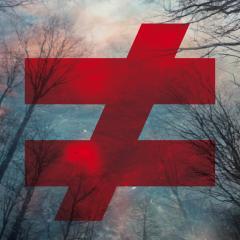
The band announced a new album would be due on May 6 via XL Recordings on their website in January 2013. The bottom of the image featured the initials for the album, sparking speculation for fans and critics.[14] Following a tweet from the band's official Twitter account that read "NYT Classifieds…" the album's title and release date were confirmed in the February 4 edition of The New York Times. The sole entry in the "Notices & Lost and Found" column of the daily newspaper read: "Modern Vampires of the City, May 7, 2013".[15] The band updated their official website with the track listing and several tour dates shortly thereafter.[15]
Critical reception[edit source | editbeta]
Professional ratings
Review scores
Source Rating
Allmusic 4/5 stars[11]
The A.V. Club A[16]
Robert Christgau A+[17]
The Guardian 4/5 stars[12]
The Independent 4/5 stars[18]
NME 7/10[19]
Pitchfork Media 9.3/10[20]
Rolling Stone 4.5/5 stars[21]
Slant Magazine 4.5/5 stars[22]
Spin 8/10[23]
Modern Vampires of the City received universal acclaim from music critics. At Metacritic, which assigns a normalized rating out of 100 to reviews from mainstream critics, the album received an average score of 84, based on 50 reviews.[24] In his review for The Independent, music critic Simon Price called it Vampire Weekend's "most outwardly straightforward" and "most cohesive and convincing effort yet."[18] Robert Christgau, writing for MSN Music, said that the songs have several "twists" in their "boy-to-man themes" and that, like the Beatles' 1967 album Sgt. Pepper's Lonely Hearts Club Band, each lyric and musical element is "pleasurable in itself and aptly situated in the sturdy songs and tracks, so that the whole signifies without a hint of concept."[17] Nathan Brackett of Rolling Stone said that the album has a "precise craft and soul that speaks to the heart of city life."[21] Ryan Dombal of Pitchfork Media wrote that the "vocals and music interact with each other in an effortless flow" and that "there's more air in these songs, more spontaneity, more dynamics."[20]
Although he called it a "gorgeous album", John Calvert of NME felt that the band sacrificed "the sonic smarts that made them."[19] By contrast, Alexis Petridis of The Guardian believed that Vampire Weekend succeeded in "shak[ing] off the shtick that made them famous" with music devoid of musical "novelty" and lyrics that replace their previous "arch depictions of moneyed young Wasp lives" with more "heartfelt" themes of mortality.[12] Slant Magazine's Jesse Cataldo said that, although the songs may be dense and wordy, they are also "immediately potent on a purely visceral level, striking a perfect balance that makes for what's perhaps" the best album of the year.[22] Mike Powell of Spin felt that the ambiguity of Koenig's lyrics is more than made up for by "the clarity of the music" and found the songs "sad" but catchy.[23]
Commercial performance[edit source | editbeta]
Modern Vampires of the City debuted at number one on the Billboard 200 with 134,000 copies sold in its first week, becoming Vampire Weekend's second consecutive number-one album, as well as the nineteenth independently-distributed album to top the chart in the Nielsen SoundScan era.[25] The album entered the UK Albums Chart at number three with first-week sales of 27,805 copies, earning the band their third consecutive top twenty album in the UK.[26]